My thoughts on July 4th

I joke a lot about being the queen of nuance but it really is because I have come to realise that it is possible to hold conflicting views about an issue/idea/person.

Life is never truly binary ie either/or, black/white in all situations or contexts.

Of course binary thinking is much easier as it enables us to quickly segment issues, put people in a boxes and requires us having to think through most things as we navigate through life. Life is already hard so I get making it easier to navigate

That said the true mark of maturity or growth in our thinking includes an ability to expand our mindset rather than apply brush strokes to all issues.

This is not to say we shouldn’t have convictions/core values however it means retaining some adaptability on the opinions we hold.

Our convictions should form the basis for our decision making and be evident in how we navigate life and behave towards others. Convictions however should not preclude the ability to view ideas from disparate angles.

I gave the context above to share some of my thoughts on the upcoming UK General Election coming up on 4th of July 2024

Does anyone else think there is a significance to choosing US Independence Day? 🤔😁 I grew up in a political household and i am quite fascinated by the mechanics of the electoral process. I must admit that I have become a bit jaded in the last couple of years but still believe in the idea of being able to choose our leaders

Not all of it is election related but they are my thoughts and observations about how politics play out in every day life especially in the UK. Like stated earlier these are my thoughts and opinions and could /should evolve with time

Ok here goes…

1. If you know me you know I absolutely believe the Tories ( the conservative party) need to go. After 14 years in power, I think they have effectively annihilated UK public services

2. I don’t think black/brown people should be given a pass if they perpetuate or enable harmful policies that disproportionately impact the most vulnerable people in society

3. Despite the above I also know systemic racism is a thing

4. If you also know me, you know I have a complex relationship with the concept of billionaires

5. While I struggle with the concept of billionaires I absolutely believe in building wealth and working towards financial security. I think value should be rewarded and if you have been able to create value you should/can get wealthy from it

6. The above said I don’t believe the value of a person is tied to their monetary worth

7. I don’t want Rishi Sunak to be the next Prime Minister but not entirely sure Kier Starmer will be a great one.

8. I vote mostly on how a manifesto is able to hit certain core issues( based on my convictions) and my assessment above is not based on the personality of the party leaders but what their party manifesto represents

9. I dislike that Rishi gets bullied ( yes bullied) for being privileged or wealthy

10. Does he help himself? No but the real issues in this election are ideological and systemic issues that date back decades ( from as far back as the Magaret Thatcher years)

11. New labour in 1997 ushered in an era of social mobility that reduced childhood poverty in the UK( one of my core convictions) and this has steadily been eroded from 2010

12. So yes the Tories need to go!That said I believe Rishi Sunak is no less competent than Boris Johnson ever was.

13. So why did Boris Johnson get a landslide majority vote in 2019 of over 80 seats( highest ever majority since 1997) and Rishi Sunak is currently polling to lead the Tories to probably its worst ever election result in years ( going from 372 seats to 190 in some polls)

14. Ever heard of glass cliff theory? Google it

15. The truth is there are swathes of the electorate in the UK who believe black and brown people should know “their place”

16. Those “places” do not include being wealthy or being in positions of authority or power

17. When the Conservative Party( and that’s the core demographic I am alluding to here) got the chance to vote between a somewhat competent Rishi Sunak and a very clueless Liz Truss, they chose Liz Truss ( I wonder why 🤔) Remember what she did to the economy? Remember who became the poster child for it ( Kwasi Kwarteng if you have forgotten 🤷🏾‍♀️). Also remember Rishi Sunak became PM by stealth and not because the core Conservative Party voted for him.

18. If you think I am making it up, please check out how the British press( the absolute perpetrators of “knowing your place”) report on wealthy black footballers in relation to their white counterparts

19. It’s why I am amused by privileged black or brown people who will do everything to deny systemic injustices or racism exists

20. Voting out the Tories is necessary but can we make it about their harmful policies that have had significant impact on the public services in the last 14 yrs please?

21. Rishi Sunak as a child didn’t have a say in his parents sending him to private school and that’s an unfair basis to judge whether or not he is a good leader

22. Do I think he is a good leader? No but let’s make these judgements fair and objective please

23. Britain is a society built on some very classist and eugenistic tendencies so yes I can smell some low key hating on Rishi because of his wealth and ethnic heritage

24. The above does not however negate the fact that other countries including those colonised by Britain also have harmful tendencies that negatively impacts its citizens. We don’t live in an ideal world and I am not idealist. I am however pragmatic with a dose of optimism that we can and should do better

25. If you are a black or brown person with some level of authority or privilege, pls don’t apologize for it. Own it! But do try as much as possible to send the ladder back down. Recognise and acknowledge some of the advantages you might have had and try to advocate for the least of these ie those people who might not have the access that you do

26. I think two party politics needs to be reassessed. It just doesn’t seem to be working anywhere

27. Lastly, regardless of party affiliation or how disenfranchised you might be feeling about our current political climate, I still think it’s our civic responsibility to vote. Vote your convictions but pls don’t tap out entirely as politics has far reaching socio economic implications for our society
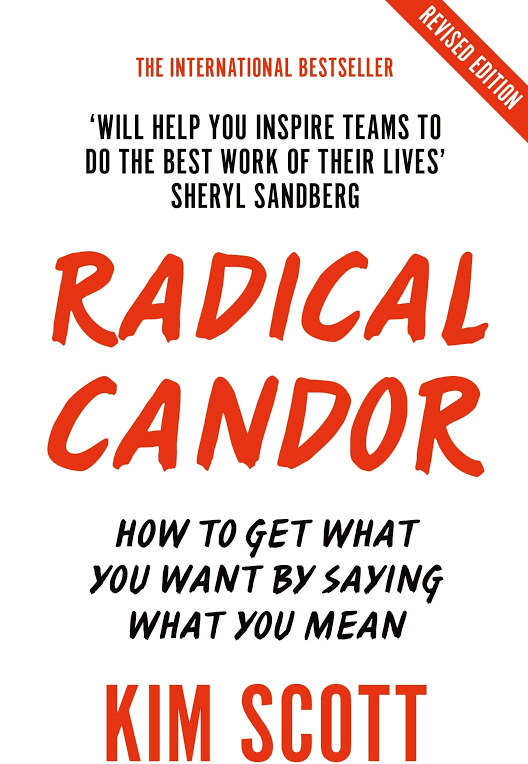
Book Review- Radical Candor by Kim Scott

Radical Candor by Kim Scott was written in 2017 and has been recommended to me by a number of people whose opinions I really value.

I decided to read it this year as one of my key areas of growth is honing my leadership skills so I can continue to support my team to be the best they can be.

I have always been drawn to the premise of the title due to personal observations in the workplace where being direct is sometimes seen as a contrast to being kind.

I was able to get into the book immediately as the author excellently mixed stories/personal anecdotes from her career as an executive in Silicon Valley, created a framework while also giving really actionable and practical ideas/tips.

This is a really hard thing to do in a lot of business/personal development type books ( lots of them could be much shorter) but I think Kim Scott was able to pull it off.

Photo Credit – Management for Start ups

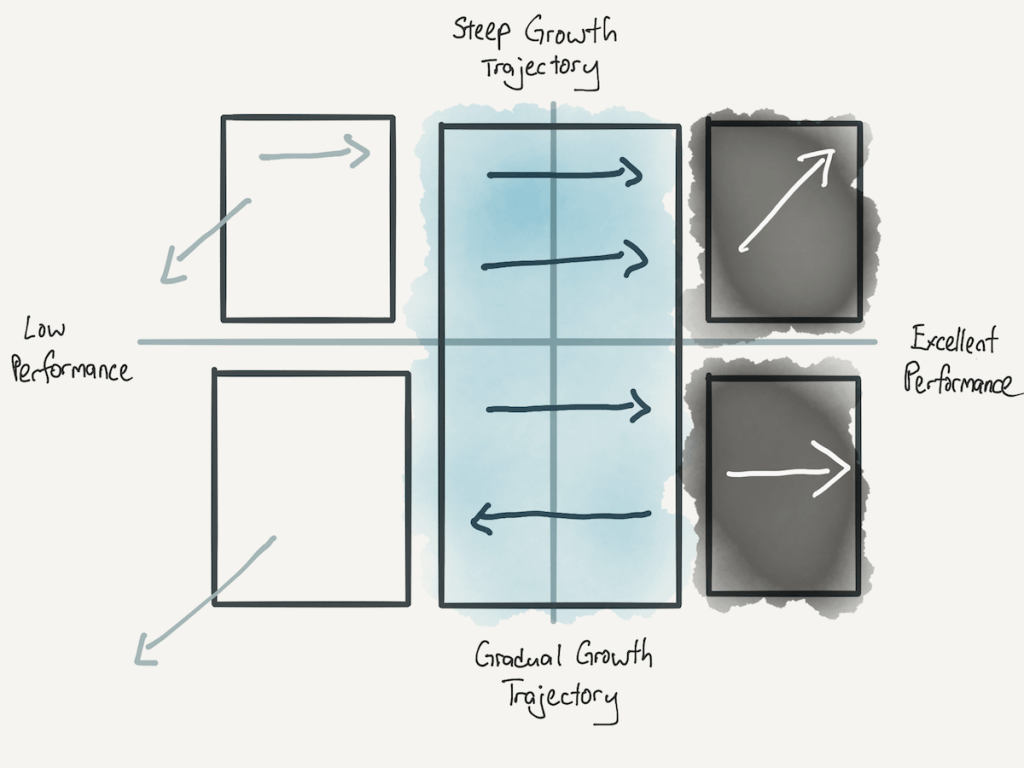
The quadrant above forms the premise of most of this book. The early chapters of the book goes into a lot of detail explaining the various terms noted in the image above.

As someone who describes herself as a recovering people pleaser, it was particularly enlightening to get a term for what I have always wondered about in the word ruinous empathy.

She describes it as when a leader is very high in “caring personally, but low on challenging directly”. It’s the stance taken when people feel they are being nice or don’t want to hurt other people’s feeling even when it’s obvious that there are things that need to be challenged.

Compassion is empathy plus action

Kim Scott

She gives a personal example of this in her career and the adverse effects this could have on other team members. It also highlighted how empathy, compassion, kindness or any “seemingly good” motives have to tempered with a sense of fairness and equity.

The latter parts of the book go into a lot of detail and practical tips on how to be the leader who cares personally AND challenges directly( the right quadrant in orange).

She gives lots of ideas on how to go about being this person but with a nuanced approach that acknowledges that there is never a one size fits all approach when it comes leading or managing people.

Photo credit – Management for Start Ups

Another interesting concept for me was how to build a performance culture in a team when managing or leading individuals with different intrinsic or extrinsic motivations. She defines individuals in teams into two broad categories – rock stars and super stars

She defines rockstars as those people who are solid, depedendable and who are not always looking to the next things but want to hone their skills.

She defines superstars, as those who are on a steep career trajectory and are always looking to the next thing or challenge.

She explains that rockstars are often prone to staying longer and can be the backbone of your team but it can be tricky to keep superstars in one position for a long time as they get bored quite easily.

The best way to keep superstars happy is to challenge them and make sure they are constantly learning

Kim Scott

I particularly love the nuanced take on what we could call a very broad categorizations of people and how she takes the time to explain that one isn’t inherently better than the other.

They are just different!

Using personal examples and stories, she also highlights how these categories are fluid as individuals can default to these states based on their current life seasons or circumstances.

It really resonated with me as someone who has fluctuated between being a stay at home mum, not wanting to take on extra duties at work so I could do the school run and growing into being able to lead really complex and challenging change initiatives at various stages in my career and life.

I often joke that my stay at home mum days gave me so many immeasurable skills that I bring to the workplace but the author elaborates on this idea in such a beautiful way.

I love a quote and it is something I often look out for in any book and this book didn’t disappoint.

I highlighted so many quotes from the book and will share below a few of my favourites.

If you want to build a ship, don’t drum up people to collect wood and don’t assign them tasks and work, but rather teach them to long for the endless immensity of the sea.

Kim Scott

For me it reinforces that people work better at the what and the how when they understand the why!

The essence of leadership is not getting overwhelmed by circumstances.

Kim Scott

This is especially true when leading change. The circumstances will never be perfect but it’s important not to get overwhelmed.

Sometimes, the greatest gift you can give your team is to let them go home!

Kim Scott

Or log off in the hybrid world! For me this especially resonates in understanding that work is just one element of an individual’s life. Caring personally means acknowledging that.

When management is the only path to higher compensation, the quality of management suffers, and the lives of the people who work for these reluctant managers become miserable

Kim Scott

This quote and part of the book taps into my belief that we need broader ways of compensation that does not always translate to leading or managing people. Not everyone who is great at their job will be great at managing/leading people.

We have too many people who are miserable in their work lives because they are being led by someone who does not want to be responsible for people.

Listen, Challenge, Commit. A strong leader has the humility to listen, the confidence to challenge, and the wisdom to know when to quit arguing and to get on board

Kim Scott

This needs no further explanation. This last quote is one I have started intentionally practicing. Listening is not exactly my strongest forte but was something that really shone through this book.

Books like these are meant to be revisited again and it is one I will be surely revisiting. I listened to it on audiobook and have now ordered a physical copy to dip in and out of.

It was a really great read and one that I would highly recommend for anyone who is interested in being both effective and kind as a leader.

Featured

“Seeing” People

Photo credit – Inspiring quotes

My working week is packed with lots of peopling (a term I have co-opted which means being in the company of lots of people) for ALOT of time.

The nature of my work means that I am in a lot of meetings, workshops and spending large amounts of my time with different people about different things. My peopling doesn’t end also on week days as I serve as a minister in my local church which means Sunday mornings ( and some afternoons) is also spent in the company of people outside my immediate family.

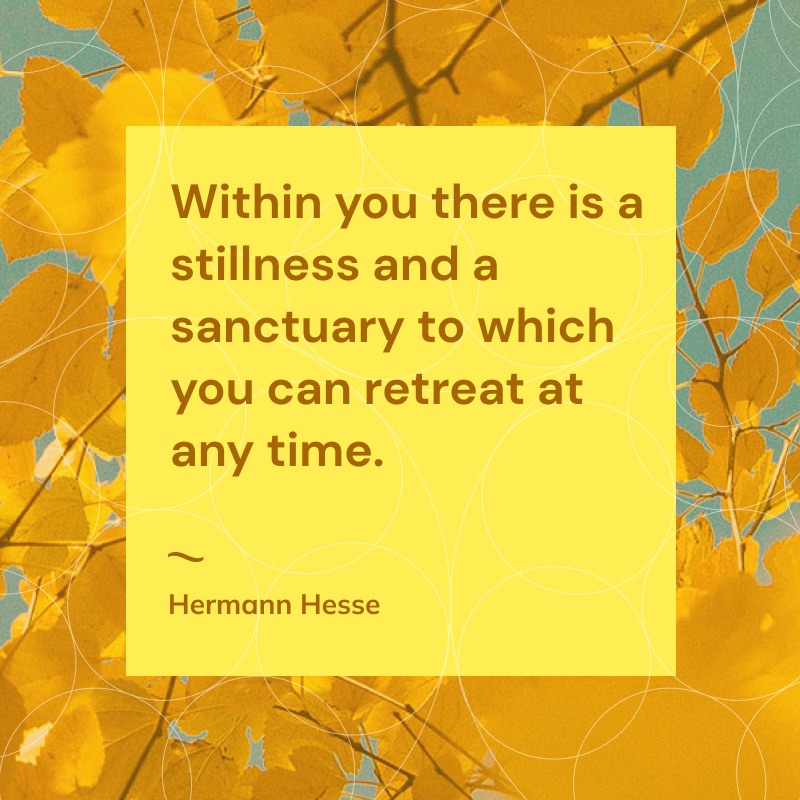
It’s something I generally enjoy as I would describe myself as a people person. That said, this amount of constant peopling has awakened or rather rekindled my need for solitude. While I would appear extroverted, I have found that withdrawing or being by myself is required for me show up as my best self at peopling.I share this to provide some context to the title.

What does it truly mean to see a person?

It might seem ironic but I find that the more people you spend time with, the lower the chances are that you actually see them. Spending time in solitude either praying, reflecting or meditating has given me the space to think about how often I truly see people despite constantly being surrounded by them.

Photo credit – Inspiring quotes

I have italicized see to emphasize seeing a persons humanity and not just physical sight. In the bid to get the results or outcomes, there is a higher likelihood that I begin to care more for people’s perception of me rather than seeing them as a person.

The more I care about perception, optics, procedures, processes ( and I am such a process driven person) and all the other things we put in place to manage people,the less I care about them as humans.

They become stakeholders, members, staff, volunteers, sales targets, users ie numbers that I need to mold or influence to get what I need.

If they hold differing opinions on certain issues, there is a chance I might even begin to view them as stumbling blocks. Their humanity gets lost and I begin to view them as a means to an end or “resources” ( no offence meant HR professionals).

All I have described seems quite sinister but really isn’t. It’s what happens as most of us go to through the daily grind of trying to serve or earn a living. Most people ( not all) don’t start with the intention of viewing fellow humans as numbers.

It just happens!

We can even define them as a coping mechanisms as it’s nearly impossible to have the capacity to truly connect with people on a personal level in large numbers.

Relationship building is an intentional activity which requires giving of ourselves in ways that is difficult to scale in large numbers. It’s easier to see less people!

I am a Christian and follow the example of Jesus Christ in most things. Even he had a core group of 12 disciples despite having lots of followers.

We read his story of feeding 5 thousand and we didn’t get to read the name of even one of those 5 thousand meanwhile we get to read about the 12 in some detail.

Research has shown that 5 to 7 is the optimal number of direct reports or people one person can effectively manage/lead to drive the best results. This is especially true for work that requires executing some kind of shared vision.

Great leadership is not just about instruction, delegation or decision making. It also comes with an ability to inspire and empower those being led towards working together to achieve common goals.

Being able to influence or inspire to achieving a goal often occurs when individual in the group feel seen. The parameters or markers of being seen will differ from individual to individual but it takes some intention and work. It takes going past the numbers/task and trying to connect with people on a personal level.

Photo credit – Inspiring quotes

At the core of this is the understanding that people are at the core of achieving most organizational, societal or cultural goals.

People who feel seen are more likely to be engaged and an engaged person often translates to greater participation. Greater participation creates ripple effects which invariably leads to better outcomes.

While it would be impossible( and probably not wise) to build relationships with every SINGLE person I come across in work and vocation, this piece is a reminder to myself and others to keep people at the forefront of what I do.

To make an effort to see those I serve even when it’s difficult.

To care for people over caring about what they think about me.

It might mean being discerning enough to figure those who need to be seen and when.

Being seen might not be an ongoing activity in certain situations. Perhaps learning to adapt to where and when it’s needed could be the skill that we all need to learn

This could take the form of;

Being understanding with that colleague going through a tough personal patch and it’s impact on their performance

Reaching out to that parish member who is caring for an ailing parent while also dealing with other life issues

Noticing and encouraging that parent on the train with the crying toddler when all they can feel is the judgement of other passengers

Being the one who acknowledges the issues a ‘challenging’ customer has faced and choosing to apologise for the service failings

Choosing to listen to a colleague’s idea about solving a problem even if you have a different solution

The list above is by no means exhaustive but these are one off situations in which we can make people feel seen. In the broader sense, making people feel seen requires an effort to go beyond the surface to take the time to build relationships and in turn trust.

I was asked recently on what I considered the most important element of leadership. For me it’s trust.

I won’t go into the details of this( maybe in another blog post) but trust takes effort and can be fundamentally summed up in “I feel/know this person has my back”. To feel that, you have to gone through various phases and iterations of feeling seen by said individual.

It’s easy to revert to coping mechanisms but writing this has made me reflect on how I can get better at seeing people. I hope reading this makes you do the same too.

Thank you so much for reading and hope you have a great weekend.

The Weakest Link

Nelson Mandela’s Long walk to Freedom is one of my favourite autobiographies ever .It is quite a bulky read at 656 pages but was a book that not only humanized a legend but also taught me a lot of life and leadership lessons.

One of the prevailing lessons that run through the book and Madiba’s life was the ethos of community and teamwork.

Mandela was seen as the symbol of the apartheid movement in South Africa but his autobiography details the efforts of other figures like Cyril Ramaphosa, Oliver Tambo,Walter Sisulu etc.

All of these men and Mandela brought their different strengths and weaknesses to what can be described as one of the most pivotal civil rights movements of the 20th century.

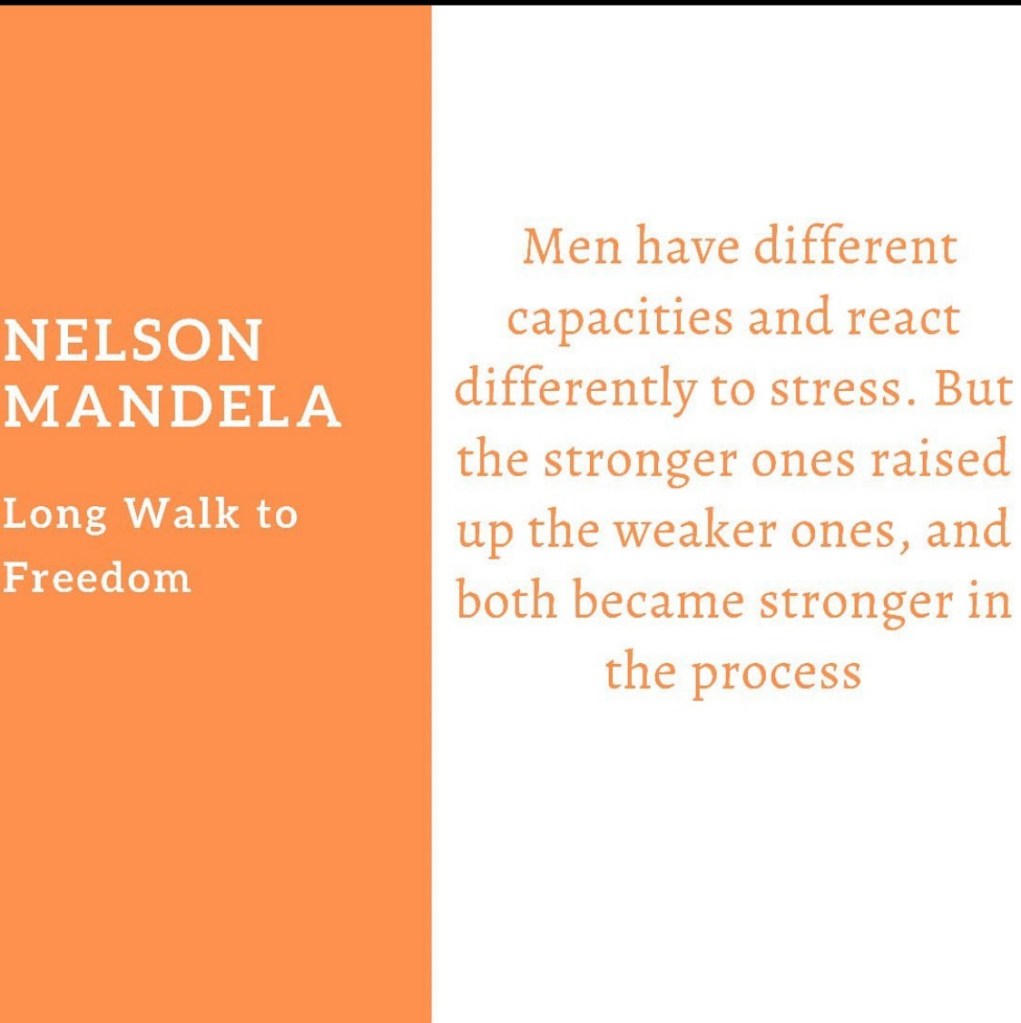
As the pictured quote states, we all have different capacities,strengths and weaknesses.Most of us either in school or at work have been assigned to work as part of a group to deliver an outcome (some of us call them projects😉). Working in teams evokes a lot mixed feelings for most of us as it means having to consider or rely on other people and gosh can people be tricky!

Group/team work is great because it often takes collective effort to achieve success in most human endeavor. Different members of the group possess different skills or strengths ,the work gets shared and we can all relieve the pressure on individuals as we pitch in when necessary.

On the flip side,you have members of the group whose weaknesses can feel like a drawback or detract from the end goal.

The natural inclination this instance is to drop the dead weight and look for stronger team mates (cue Anne Robinson’s voice “You are the weakest list, Goodbye! 😀 on the famed BBC Gameshow The Weakest Link

the whole is always greater than the sum of its parts

Aristotle

Mandela’s quote challenged me to think of strengths and weaknesses in a different light.It made me reflect on the following questions in the context of different units of society; families, institutions, organisations, communities etc.

1. What if we looked at individual strengths in a collective fashion?

2. What if the stronger team mates saw their strengths as an advantage that benefit the whole?

3. What if the perceived weakest link was the glue that kept the other strengths working as a unit?

4. Can we ever truly quantify an individual’s contributions in purely numerical terms?

5. How do we objectively define strengths that cater to all abilities?

6. What would society become if we left behind all the percieved weakest links?

I agree that there are no easy answers to the questions above. It also not a concept that comes easily as the world is mostly wired to the survival of the fittest. It’s one that will take a lot intention and seems much more difficult than just shedding the dead weight.

I don’t think there are straight answers but the book made me reflect on how we could view strengths and weaknesses in a different light.

One of the easiest way to start is to begin to question how we see those abilities that don’t fit neatly into broad categories.

Is the weakest link truly weak or do they have a different ability that could utilised differently or in a different context?

Another easy action would be to acknowledge that we all have strengths AND weaknesses which in turn enables us to accommodate/respect other people’s strengths weaknesses. Seems pretty obvious but I never cease to be surprised at how many people can’t seem to hold this nuance particularly in how they relate to others. We see this play out in different elements of society and how much disdain we can hold for people who don’t follow conventional paths and how we narrowly define success.

Mandela’s insights remind me of a truly remarkable individual who realised that no one of us is ever truly self made. Our weakest links could be held up by another’s strongest attribute

Alone, we can do so little; together, we can do so much

Helen Keller

Thank you so much for reading and I am really looking forward to hearing your thoughts and even questions.

Be Curious

Photo Credit- Inspiring quotes

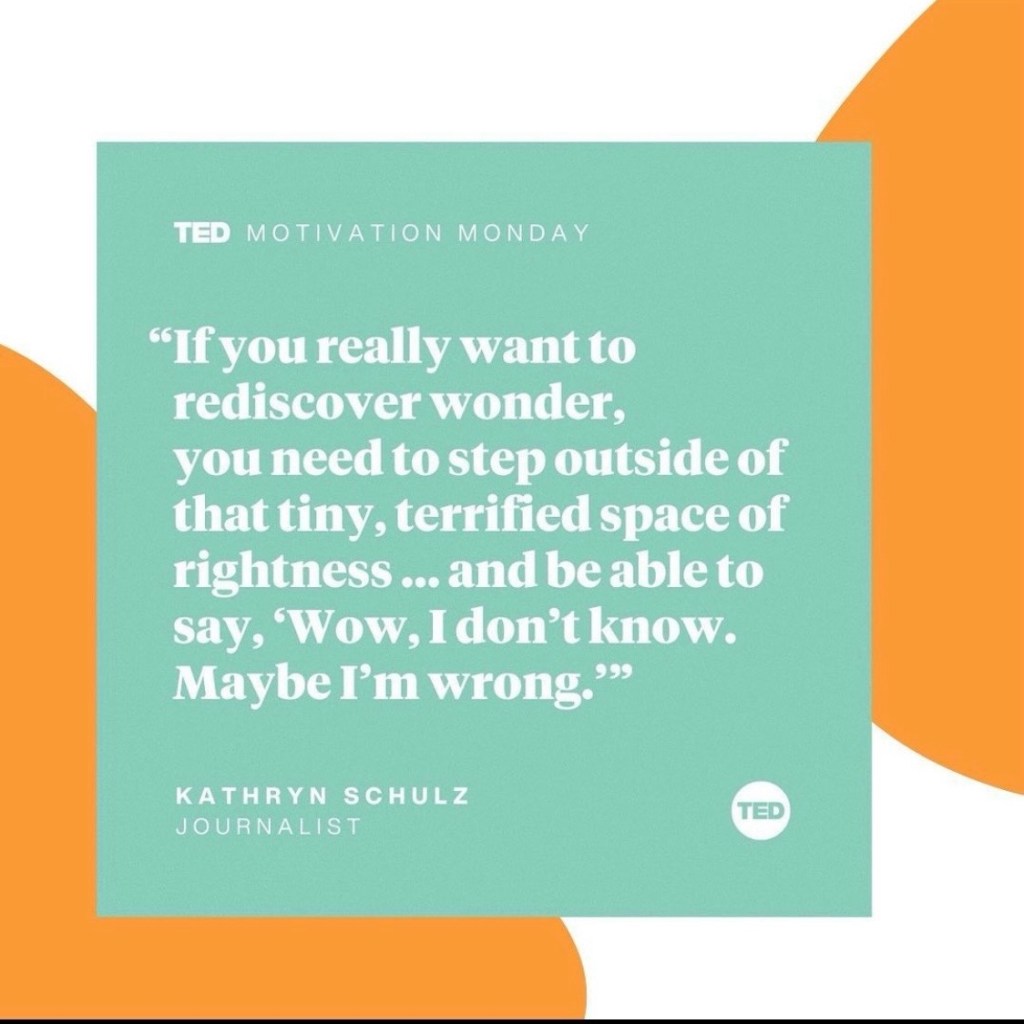
Curiosity comes with a willingness to admit being wrong.

To be open to considering an alternative view.

People assume that being curious or open to other perspectives is a threat to holding firm convictions or values.

Our values and convictions are often how we show up in the world but we must also be aware that other external factors influence how we see and experience life.

Every human society is an enterprise of world-building

Peter Berg

We might not always admit it but elements of our values and convictions are a result of imaginations, innovations, and ideas in the world around us.

Most of what we find ourselves doing is consistent with our culture (if not all).

I spent most of my childhood, teenage and young adult life in Nigeria. I moved to the UK in my mid twenties and have lived here since.

While I mostly consider myself Nigerian, it would be foolhardy of me to think that I haven’t imbibed elements British culture.

20 yr old me would be astonished at how easily I can kickstart a conversation of the back of the weather. Or how much tea I now drink.😁

We must be willing to admit that we are all prone to group think, stereotypes, prejudice , objectification etc.

“Cultures” are environments, or “worlds,” we create for ourselves.

It’s why we must be willing to question the status quo. We must be willing to accept that there might be a perspective that differs to ours which might not be entirely wrong or false

Photo credit – Ted

This is how change occurs; new things are discovered, new ideas are expanded on and adapted to the old. I know change isn’t always synonymous with better ( believe me when I say this) but at least we are able to consider different.

It’s a relatively new year and while a lot of us are considering new ways of doing I am urging us to also consider a new way of being.

So as you start this new week, what can you be curious about?

Trying out a dish you have never tried?

Taking a different route on your daily walk/run?

Start a conversation with someone you ordinarily wouldn’t?

Read an article outside your area of discipline or interest?

Be willing to really listen to something, someone or a viewpoint you disagree with?

These are just a few ways you can be curious not just this week but as we go into a new year!

Thank you for reading and would be curious( pun intended 😁) to hear how you are going to be curious this year